
Get your exact price
Three quick steps. A real quote for your real bathroom.

Verify us in one tap. We are accredited by the Better Business Bureau. Your quote is written, free and comes with zero obligation.
Walk-in tubs, hurricanes and power outages
What keeps working when a storm takes the power, what stops, and how to plan a safe bath around Florida's hurricane season.
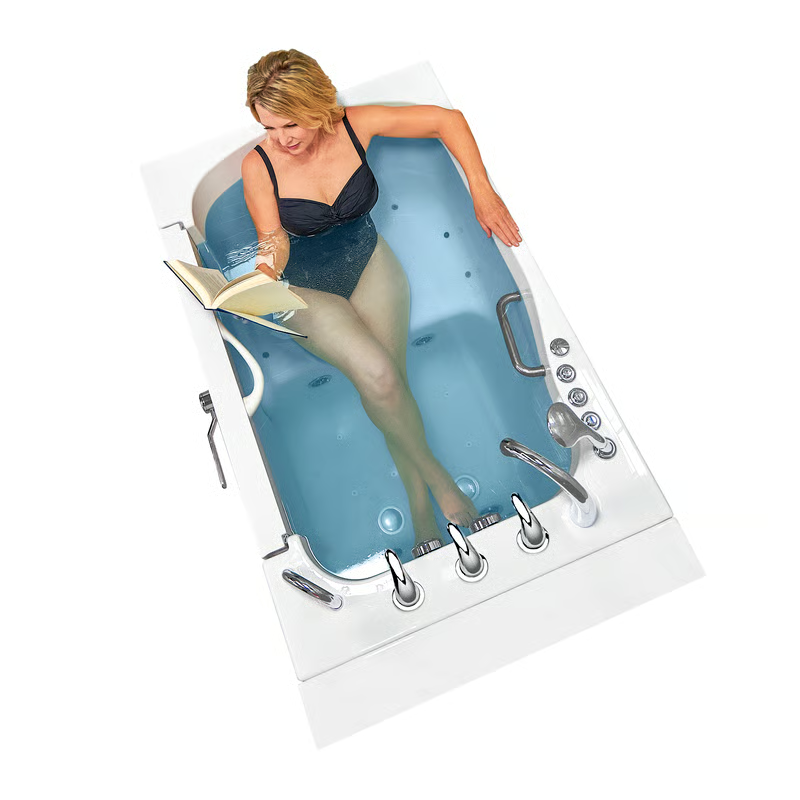
Direct answer: Without power, a walk-in tub's door, seat, grab bars and gravity drain still work, so you can finish a bath and get out safely. Jets, inline heaters and heated seats stop, and an electric water heater stops making hot water. Run any generator outdoors only, at least 20 feet from windows and doors, as Ready.gov advises.
 Planned for storm season
Most of a walk-in tub does not need electricity
Florida families ask us one storm-season question more than any other: what happens if the power goes out while I am in the tub? The reassuring part is that the parts that keep you safe are mechanical. The door, the latch, the seat, the grab bars and a gravity drain all work with the power off.
What stops are the comfort features, and sometimes the hot water. Knowing which is which, and planning a little before a storm, takes most of the worry out of an outage. Everything below about generators, carbon monoxide and storm safety comes from federal guidance at Ready.gov (FEMA) and the National Weather Service. Everything about the tub itself is general; your model's manual has the final word.
What works and what stops without power
Use this as a checklist for your own tub. If you are not sure which drain or heater your tub has, the model number on your paperwork will tell you, or call your installer.
| Feature | Without power | What to know |
|---|---|---|
| Door, latch and seal | Works | Mechanical. The door is meant to stay closed while the tub is full and opens once the water drains, power or not. |
| Seat, grab bars, textured floor | Works | No power involved. |
| Gravity drain | Works | Empties by gravity as long as your home's drain lines are clear. Ella, for example, uses a gravity-driven dual drain. |
| Powered or pump-assisted drain | Check your model | If a pump speeds up draining, ask your installer how the tub drains when the pump has no power, and how long it takes. |
| Faucet and hand shower | Usually works | Needs water pressure from your utility or well. A private well pump stops without power. |
| Hot water | Depends on your heater | See the water heater section below. |
| Air jets and water jets | Stops | Both run on electric motors or blowers. |
| Inline heater | Stops | It only keeps bath water warm during a soak. It never heated cold water to begin with. |
| Heated seat or backrest, lights, digital controls | Stops | Comfort features only. |
Your water heater decides whether you get a warm bath
A walk-in tub holds more water than most standard tubs, and you sit in it while it fills. Hot water is what makes that comfortable, and hot water depends on your heater, not the tub.
Electric tank
Stops heating the moment the power goes out. Water already in the tank stays warm for a while, then cools.
Gas tank
Some older units with a standing pilot keep working. Many newer ones use electronic ignition or controls and need power. Your manual says which you have.
Tankless, gas or electric
Most tankless heaters need electricity for their controls, and gas models for their fan and ignition. Expect no hot water during an outage unless the manual says otherwise.
Heat pump
Runs on electricity, so it stops with the power.
Before you rely on a deep soak during storm season, it is worth knowing how big your heater is and how long its stored water lasts. Aging Safely Baths explains how to size a water heater for a walk-in tub.

If the power goes out in the middle of a bath
- Stay seated. You are on a chair-height seat with grab bars within reach. Nothing about the tub becomes unsafe because the lights went out.
- Open the drain. A gravity drain empties normally. If your drain is pump-assisted, follow the steps your installer gave you.
- Wait for the water to go down, rinsing with the hand shower if you still have water pressure. Then open the door as usual.
- Get out slowly, in whatever light you have. This is the step where a battery lantern on the counter earns its keep.
Plan ahead: in storm season, keep a battery lantern within reach of the tub and a charged phone in the bathroom. If balance is a concern, avoid bathing alone when an outage is likely.
Thunder means no bath. The National Weather Service advises staying away from plumbing, including baths and showers, during thunderstorms, because lightning can travel through pipes and wiring. Florida's afternoon storms make this a daily summer habit.
A short storm-season plan for an accessible bathroom
The Atlantic hurricane season runs June 1 through November 30. These steps take an afternoon and pay off every time the lights flicker.
Know your tub's breaker
Jetted and heated tubs are usually wired on their own GFCI-protected circuit. Label that breaker so anyone in the family can find it. Press the GFCI test button now and then, as your manual directs.
Light and power for small things
Ready.gov recommends flashlights for every household member and planning batteries or a power bank for anything that runs on electricity. Keep one light in the bathroom.
Medical devices and medicines
If someone relies on powered medical equipment or refrigerated medicine, Ready.gov advises making a plan with the medical provider, including how long medicines can be kept warm.
Florida's Special Needs Registry
People who depend on electricity for medical equipment, need help with transportation or need help in an evacuation can sign up with their county through floridadisaster.org/snr. Registering does not guarantee a shelter space, so keep your own plan too.
Bathe early
When a storm is on the way, take your bath while the power and water are still on, rather than in the evening as the wind picks up.
Know your evacuation zone
Ready.gov's hurricane guidance is clear: if officials order your zone to evacuate, leave immediately. A bathroom plan never replaces that.
Generators and carbon monoxide: the rules that save lives
Generators are common in Florida after hurricanes, and so is carbon monoxide poisoning. Ready.gov's guidance is short and firm:
- Use a generator only outdoors, at least 20 feet from windows, doors and attached garages.
- Install working carbon monoxide detectors with battery backup on every level of your home.
- Never heat your home with a gas stove or oven.
- Keep the generator dry, and let it cool before refueling.
Our advice on the tub itself
Do not plan to run jets or an inline heater from a portable generator. Save that power for refrigeration, fans, phones and medical equipment. If you want a standby generator that can power household circuits, have a licensed electrician install it and the transfer equipment. Never connect a generator to your home's wiring yourself.
Our guide to checking a Florida contractor license shows how to confirm an electrician's license before you hire one.
When the power comes back
Ready.gov warns that power can return with surges or spikes that damage equipment, and recommends turning off or unplugging appliances and electronics during an outage. A walk-in tub's pump and heater are wired in, not plugged in, so ask your installer whether switching the tub's breaker off during a long outage, and back on once power is steady, makes sense for your model.
Then run a short check before your first bath: fill a few inches, run the jets briefly, make sure the GFCI has not tripped and watch the drain.
If the bathroom flooded
Ready.gov says not to touch electrical equipment that is wet or while standing in water, and to turn off power at the main breaker only if it is safe to do so. A tub whose pump, heater or controls sat in floodwater should be checked by a licensed electrician or your installer before anyone switches it back on.
If there is a boil-water notice
Follow your county's instructions about bathing as well as drinking, and keep water out of any cuts.
For humidity, mold and flood-zone remodeling rules, see our Florida bathroom climate guide.
Power outage FAQ
Can I get out of a walk-in tub if the power goes out?
Yes. The door and latch are mechanical. Open the drain, stay seated while the water goes down, then open the door as usual. A gravity drain works without power; if your tub has a pump-assisted drain, ask your installer how it drains when the pump is off.
Do walk-in tub jets work during a power outage?
No. Air jets, water jets, inline heaters, heated seats and lights all need electricity. The tub still fills and drains, and the seat, door and grab bars work normally.
Will I have hot water for a bath during an outage?
It depends on your water heater. Electric tank and heat pump heaters stop heating, and most tankless heaters need electricity to run. Some gas tank heaters keep working. Check your heater's manual.
Can I run my walk-in tub on a portable generator?
We do not recommend running jets or heaters on a portable generator; save that power for refrigeration and medical needs. Ready.gov says to run generators only outdoors, at least 20 feet from windows, doors and attached garages. Any connection to house wiring should be done by a licensed electrician.
Should I sign up for Florida's Special Needs Registry?
If someone in your home depends on electricity for medical equipment or would need help evacuating, the registry at floridadisaster.org/snr lets your county emergency managers plan for them. Registering does not guarantee a shelter space.
Official sources
- Ready.gov (FEMA), Power outages: ready.gov
- Ready.gov (FEMA), Hurricanes: ready.gov
- National Weather Service, Lightning safety: weather.gov
- Florida Division of Emergency Management, Florida Special Needs Registry: floridadisaster.org
- NOAA National Hurricane Center: nhc.noaa.gov
Tub feature details are general. Your model's manual and your installer have the final word for your tub.
Want a tub that is ready for storm season? Call us.
Free quotes for Florida homes. No pressure.
1-888-779-2284 (BATH)