
Get your exact price
Three quick steps. A real quote for your real bathroom.

Verify us in one tap. We are accredited by the Better Business Bureau. Your quote is written, free and comes with zero obligation.
Hard water and your walk-in tub in Florida
What Florida utilities report about hardness, how to find your own number, and how to keep scale off the parts of a walk-in tub that matter most.
Direct answer: Much of Florida has hard water. Tampa reported a 2024 average of 185 mg/L (very hard) and Orlando's OUC lists 129 ppm (hard). In a walk-in tub, scale collects on the faucet, hand shower, jets, drain and door seal, so rinse after baths, wipe the seal, and run the jet cleaning cycle your manual describes.
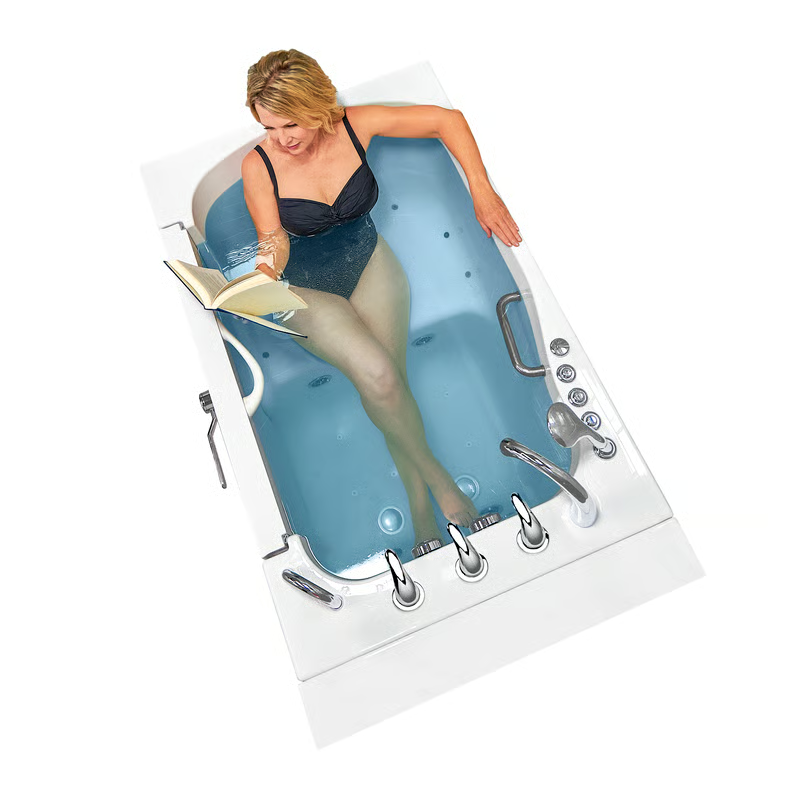 Less scale, easier care
Much of Florida's tap water is hard, and tubs show it first
Hardness is mostly dissolved calcium and magnesium. It is not a health problem, but it leaves scale behind wherever water sits or evaporates. In a walk-in tub, that means the faucet, the hand shower, the drain, the jets and the door seal, which happen to be the parts that keep a walk-in tub working smoothly.
Hardness varies a lot from one Florida utility to the next. Two published examples show the range: the City of Tampa reported an average of 185 mg/L in 2024, which is very hard, while OUC in Orlando lists an average of 129 parts per million, which is hard. Miami-Dade's Alexander Orr, Jr. plant lime-treats its water to reduce hardness.
Florida examples on the hardness scale
Utilities report hardness as milligrams per liter (mg/L, the same as parts per million) or grains per gallon. One grain per gallon is about 17.1 mg/L. The bands below are the ones Lee County's environmental laboratory uses.
| Utility | Main source | Published hardness | On the scale |
|---|---|---|---|
| City of Tampa Water Department | Hillsborough River | 185 mg/L (10.8 grains per gallon), 2024 average | Very hard |
| OUC, Orlando | Lower Floridan Aquifer | 129 ppm (about 7 grains per gallon), average | Hard |
| Miami-Dade Water and Sewer, Alexander Orr, Jr. plant | Biscayne Aquifer | Lime treatment to reduce hardness before filtering; see the annual report for figures | Treated |
These are utility-wide averages. Your tap can differ, and a utility's figure can change from year to year as its water sources shift. If you are on a private well, the utility numbers do not apply to you.
How to find your own number
Every community water system must send customers a Consumer Confidence Report, also called a water quality report, by July 1 each year, according to the EPA. Many Florida utilities list hardness in it, often near the pH figure or in a "water characteristics" section. If yours does not, call the utility and ask for the average hardness at your address.
On a private well, a lab test is the way to know. Lee County's environmental lab, for example, lists hardness among its recommended drinking water tests and notes that scale deposits are a typical sign of hard water.
Tell us your number. When you ask for a quote, mention your water's hardness or the white crust on your current faucet. It helps us suggest finishes and faucet options that are easier to keep clean.
Where scale shows up on a walk-in tub
Faucet and hand shower
Scale narrows the aerator and the shower head's holes. A fast-fill faucet slows down, and the hand shower sprays unevenly. These are the first places most people notice it.
Door seal
A thin mineral film on the gasket or the surface it presses against can keep the door from sealing cleanly. Wiping the seal after baths is the habit that prevents most door drips.
Jets and air channels
Water that sits in jet lines between baths can leave deposits. Most manufacturers describe a periodic cleaning cycle for this. Your owner's manual gives the exact steps and the cleaners allowed.
Tub surface and drain
White spots and a dull ring form where water dries. Around the drain, scale and soap can combine and slow draining over time.
A simple care routine for hard water
- After each bath: rinse the tub with the hand shower, wipe the door seal and leave the door open to dry.
- Weekly: wipe the faucet, spout and shower head with a soft cloth and a cleaner your tub's maker approves for its surface.
- Monthly or as the manual says: run the jet cleaning cycle and soak the hand shower head and faucet aerator to loosen scale.
- Never: use abrasive pads or harsh scouring powders on acrylic or gelcoat. They scratch, and scratches hold more scale.
If a caregiver handles cleaning, write this routine on a card and keep it under the sink. It takes a few minutes a week and keeps the door, drain and faucet behaving like new. Our caregiver guide has more on making bath time easier for everyone.
Florida's humidity adds its own challenge. Good ventilation helps surfaces dry faster, which means less scale and less mildew. See our Florida bathroom climate guide.
Water softeners and water heaters
A whole-house water softener removes most hardness before it reaches the tub, faucets and water heater. It is a household decision, not a tub requirement. If you are considering one, compare models, maintenance and costs, and if anyone in the home is on a sodium-restricted diet, ask a doctor whether softened water is a concern for drinking.
Hard water also leaves sediment in tank water heaters. Because a deep walk-in tub depends on plenty of hot water, follow your heater's manual on flushing the tank. A heater that has lost capacity to sediment runs out of hot water sooner.
Hard water FAQ
Is Florida water hard?
In many places, yes. The City of Tampa reported an average hardness of 185 mg/L in 2024, which is very hard, and OUC in Orlando lists an average of 129 ppm, which is hard. Hardness varies by utility, so check your water quality report.
How do I find out how hard my water is?
Look in your utility's annual water quality report, which the EPA requires community water systems to send by July 1 each year, or call the utility. If you have a private well, have the water tested by a lab.
Does hard water damage a walk-in tub?
It does not damage the tub itself, but scale builds up on the faucet, hand shower, jets, drain and door seal. Regular rinsing, wiping the seal and the manufacturer's jet cleaning cycle keep those parts working well.
Do I need a water softener for a walk-in tub?
No. A softener is optional. It can reduce scale on the tub, faucets and water heater, but a simple cleaning routine works for most homes.
Official sources
- City of Tampa, 2024 Water Quality Report (published 2025): tampa.gov
- City of Tampa, Annual water quality reports: tampa.gov
- OUC, Water services and water quality: ouc.com
- Miami-Dade Water and Sewer Department, 2025 Water Quality Report: miamidade.gov
- Lee County Environmental Laboratory, Recommended tests for drinking water: leegov.com
- U.S. EPA, Consumer Confidence Report information for consumers: epa.gov
Want an easy-care tub for your water? Call us.
Free quotes for Florida homes. No pressure.
1-888-779-2284 (BATH)