
Get your exact price
Three quick steps. A real quote for your real bathroom.

Verify us in one tap. We are accredited by the Better Business Bureau. Your quote is written, free and comes with zero obligation.
Bathroom fall prevention for Florida seniors
Most bathroom falls happen during ordinary moments: stepping over a tub wall, standing up from a low seat, reaching for a towel on a wet floor. Here is what the research says and what you can change.
Direct answer: About 1 in 4 adults 65 and older falls each year, according to the CDC, and the bathroom is a common place for it. The fixes that matter most are a low or no-step entry, grab bars where hands naturally go, a seat for bathing, a non-slip floor and a lit path at night.
 Fewer risky moves
Why the bathroom deserves special attention
The CDC reports that about one in four adults age 65 and older falls each year, and that falls are the leading cause of injury in that age group. The National Institute on Aging says the same: more than one in four people 65 or older fall each year, and many of those falls can be prevented.
The bathroom concentrates the risk. Floors get wet. Tubs have tall walls. Toilets and tub floors are low. People are often moving quickly, sometimes at night, sometimes after a medication that makes them light-headed. A CDC study of emergency room visits found that most nonfatal bathroom injuries were caused by falls, and that injury rates rose with age.
None of this means a fall is certain. It means small changes in this one room can pay off more than almost anywhere else in the house. More national numbers are collected in Aging Safely Baths' bathroom fall statistics roundup.
What makes a bathroom fall more likely
The NIA lists several causes that show up again and again. Some are about the person. Some are about the room. Both can be improved.
Rushing to the bathroom
The NIA notes that conditions which cause a hurried trip, such as incontinence, can raise the chance of falling. A clear, lit path matters most at night.
Blood pressure drops
Blood pressure that drops too much on standing can cause dizziness. Hot water can add to it. Stand up slowly after a bath, and hold on while you do.
Medication side effects
Some medicines cause drowsiness or unsteadiness. Ask your doctor or pharmacist to review everything you take, including over-the-counter sleep aids.
Vision and footwear
Poor lighting and old glasses make edges hard to judge. Bare wet feet on smooth tile slip easily. A bath mat with a rubber back and good lighting help.
Weak legs and balance
Getting up from a low seat takes leg strength. The NIA recommends exercise for strength and balance. Ask your doctor what is safe for you.
The fixtures themselves
A tall tub wall, a low toilet and towel bars that were never meant to hold body weight turn everyday moves into balancing acts.
A room-by-room bathroom safety checklist
Walk through the bathroom with this list. Many items cost little. The bigger ones, like replacing the tub, are worth planning before a fall forces the decision.
Getting there
- Night lights from the bed to the bathroom
- No loose rugs or cords on the path
- A light switch reachable from the door
The floor
- Slip-resistant mat outside the tub or shower
- Spills and drips wiped up right away
- Clear floor space to turn with a walker
The toilet
- Grab bar or safety frame beside the toilet
- Raised seat if standing up is hard
- Toilet paper within easy reach
The tub or shower
- Grab bars anchored into framing, not just drywall
- Non-slip surface on the tub or shower floor
- A seat or bench, and a handheld shower
- A low entry instead of a tall tub wall
Water temperature
- Water heater or anti-scald valve set to limit hot water
- Controls you can reach while seated
Getting help
- A phone or medical alert within reach
- A door that opens outward or can be unlocked from outside
Grab bars are not towel bars. A towel bar is not built to hold a person's weight. Grab bars should be installed into framing or with anchors rated for the load.
Making bathing itself safer
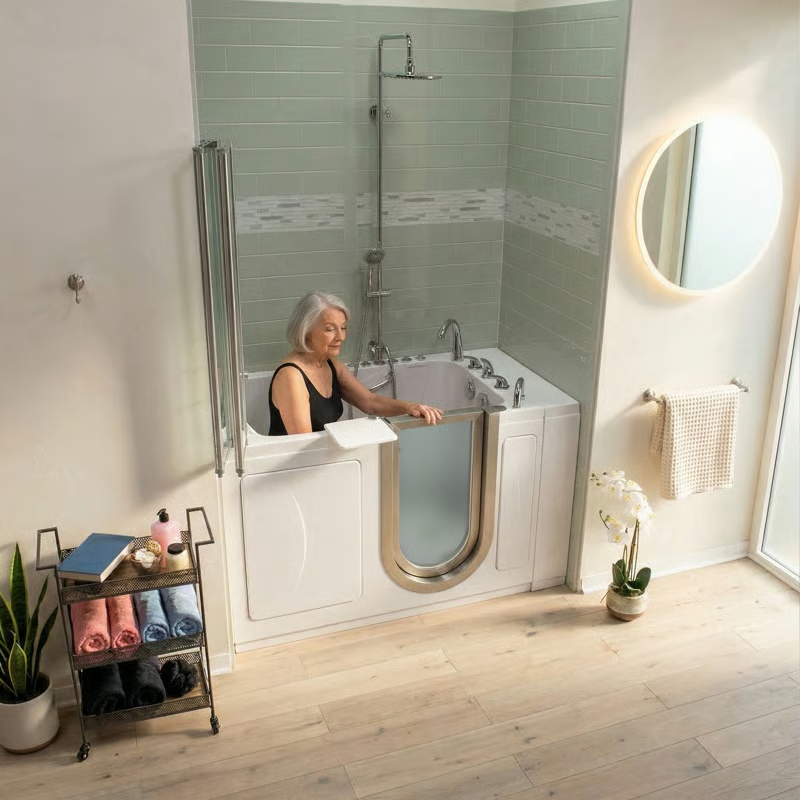
Bathing combines several of the hardest moves in one routine: lifting a leg over a wall, lowering to the floor, standing up on a wet surface. Changing the fixture removes those moves instead of asking someone to be more careful with them.
A walk-in tub replaces the tall wall with a door and a low lip, and the bather sits on a seat at chair height. A transfer tub lets someone slide from a wheelchair to the seat. A roll-in shower removes the step entirely. Our comparison guide helps you choose.
A walk-in tub is not a medical device, and no product can promise that no one will fall. What it can do is take the riskiest motions out of bath time.
Safer habits for any tub
- Gather towel, robe and clothing before you start.
- Test water with your hand or a thermometer.
- Sit to wash your feet and legs.
- Drain the water before you stand.
- Stand slowly and pause before stepping out.
- Tell someone when you are bathing if you live alone.
Florida-specific tips
Pool and beach traffic
Wet feet and sand tracked in from the pool or beach make tile slick. A mat with a rubber back at the door and a quick sweep help.
Tile everywhere
Many Florida homes and condos have tile floors throughout. Tile is easy to clean but slippery when wet. A textured, slip-resistant finish in the bathroom is worth asking about during any remodel.
Humidity and fog
Steam fogs glasses and leaves floors damp. Run an exhaust fan that vents outside during and after bathing.
Storm power outages
A dark bathroom is a fall risk. Keep a flashlight or battery lantern in the bathroom during hurricane season.
Free fall-prevention help in Florida
Florida Elder Helpline
Call 1-800-963-5337 to reach your local Area Agency on Aging. They can point you to fall-prevention classes, in-home help and caregiver support near you.
Elder HelplineYour local Area Agency on Aging
Florida has 11. See our list of Florida Area Agencies on Aging to find the one that serves your county.
Your doctor or an occupational therapist
An occupational therapist can watch how you bathe and suggest the right setup. We are glad to work from their recommendations.
CDC and NIA guidance
Plain-language facts and tips on preventing falls at home.
NIA falls page
Fall prevention FAQ
Where in the bathroom do most falls happen?
A CDC analysis of emergency room data found that a large share of bathroom injuries happened while bathing, showering or getting out of the tub or shower, and that injuries near the toilet were also common, especially for the oldest adults. Those are the two places to focus first.
Do grab bars really help?
A review by CDC researchers notes that home safety changes such as bathroom grab bars, combined with advice from an occupational therapist, were found to reduce falls among older adults. Grab bars must be anchored properly to work.
Is a walk-in tub enough to prevent falls?
It removes the tall step and the low sit, which are major risks in a regular tub. It does not fix a dark hallway, a slick floor or medication side effects. Pair it with the other items on the checklist.
Who can check my home for fall hazards?
Ask your doctor about a referral to an occupational or physical therapist. The Florida Elder Helpline at 1-800-963-5337 can also connect you with local programs.
Research cited on this page
- CDC, Older Adult Falls data: cdc.gov/falls
- CDC, MMWR Vol. 60 No. 22, "Nonfatal Bathroom Injuries Among Persons Aged 15 Years and Older, United States, 2008": cdc.gov/mmwr
- National Institute on Aging, "Falls and Fractures in Older Adults: Causes and Prevention": nia.nih.gov
- Stevens JA et al., "An Introduction to the Centers for Disease Control and Prevention's Efforts to Prevent Older Adult Falls": ncbi.nlm.nih.gov
This page is general information, not medical advice. Talk with your doctor about your own fall risk.
Want a safer bathroom? Start with a call.
Free quotes for Florida homes. No pressure.
1-888-779-2284 (BATH)