
Get your exact price
Three quick steps. A real quote for your real bathroom.

Verify us in one tap. We are accredited by the Better Business Bureau. Your quote is written, free and comes with zero obligation.
Florida Medicaid long-term care and bathroom modifications: the SMMC LTC process
Who qualifies, how the ADRC screening and CARES assessment work, what the priority score ranks mean, and what the home accessibility adaptation benefit typically pays for in a bathroom. Updated November 8, 2026.
Direct answer: Florida's Statewide Medicaid Managed Care Long-Term Care program pays for bathroom changes only through its home accessibility adaptation service, and only after three gates: a phone screening by an Aging and Disability Resource Center that produces a priority score (0 to 29 is low rank and is not placed on the wait list), a CARES finding of nursing facility level of care, and a care plan from the plan's case manager. AHCA's examples are grab bars and a special toilet seat; it says the service does not include major changes like plumbing systems.
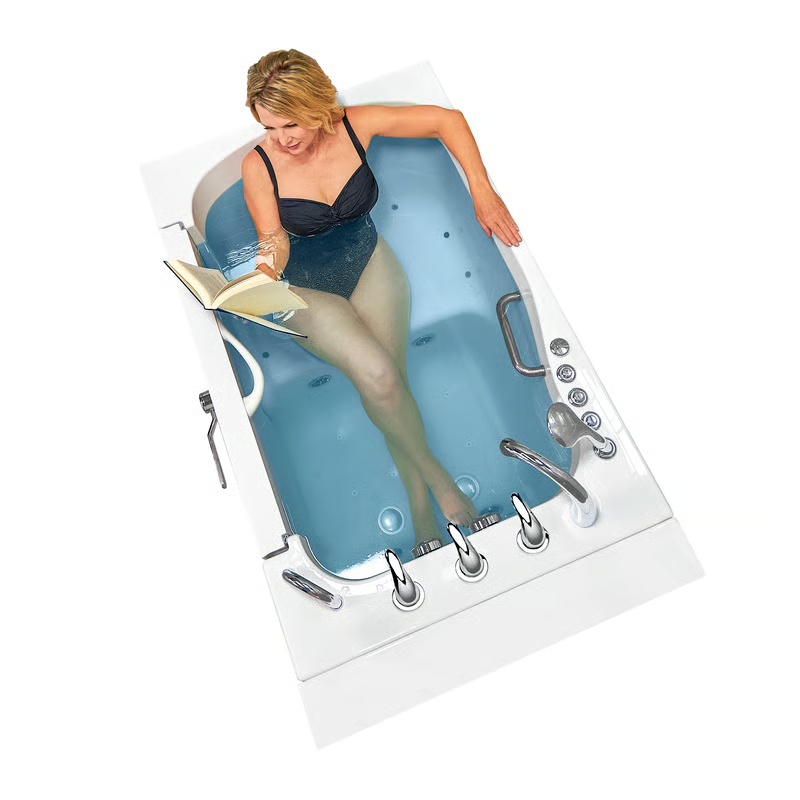 Plan the bathroom around the care plan
Why is Florida Medicaid long-term care different from regular Medicaid?
Regular Florida Medicaid pays doctors, hospitals and prescriptions. It does not remodel bathrooms. The Statewide Medicaid Managed Care Long-Term Care program, usually shortened to SMMC LTC, is a separate program for people who need the kind of help a nursing home provides but want to receive it at home or in assisted living. Enrollees pick a managed care plan, and the plan delivers a defined list of services, one of which is home accessibility adaptation.
Our guide to paying for a walk-in tub in Florida covers that benefit in a paragraph. This page covers the part families actually get stuck on: the eligibility gates, the wait list and its priority scores, and who decides what gets installed. Everything here is from the Agency for Health Care Administration (AHCA) and the Department of Elder Affairs (DOEA) pages we opened on November 8, 2026. Programs may help; none guarantees payment.
On this page
Who qualifies for SMMC Long-Term Care?
The Department of Elder Affairs lists two groups: people age 65 and over who are eligible for Medicaid, and people age 18 and over who are eligible for Medicaid by reason of a disability. Both groups must also be found by the CARES unit to be at nursing home level of care and to meet one or more established clinical criteria. Medical eligibility is decided by DOEA through CARES; financial eligibility for Medicaid is decided separately by the Department of Children and Families (DCF).
Two things follow from that. First, being on Medicaid is not enough; the level-of-care finding is the real gate. Second, even an older adult with a clear need waits for both determinations before any service starts, which is why the bathroom is often the last piece to be approved rather than the first.
Who can skip the screening and wait list
AHCA lists current Florida Medicaid recipients who are exempt from screening and the wait list when they meet the other LTC requirements:
- Nursing facility residents who have lived in a Florida licensed skilled nursing facility for at least 60 consecutive days and ask to move into the community
- People referred by DCF under the Adult Protective Services Act as high risk and placed in an assisted living facility temporarily funded by DCF
- Adults 18 to 20 with a chronic debilitating disease that generally requires 24-hour medical, nursing or health supervision
- Adults with cystic fibrosis, who contact DOEA directly
What are the steps from first call to enrollment?
AHCA's recipient FAQ lays out three stages. The table adds who does each one and what the bathroom has to do with it.
| Stage | Who does it | What happens | What it means for the bathroom |
|---|---|---|---|
| 1. Screening | Your Aging and Disability Resource Center (ADRC), reached through the Elder Helpline, 1-800-963-5337 | A phone screening of about 45 minutes to an hour produces a priority score and rank. DOEA sends written notice of the rank and how to ask for a copy, a hearing or a rescreening. | Describe bathing difficulty and falls honestly. The score reflects need, and a low rank means no wait list placement. |
| 2. Wait list and release | DOEA and the ADRCs | High-rank individuals go on the wait list. DOEA releases people monthly by score and frailty within the slots AHCA makes available, not by time on the list. | Report a fall, a hospital stay or a lost caregiver to the ADRC; a significant change can justify a rescreening. |
| 3. Eligibility | CARES (DOEA) for medical eligibility; DCF for financial eligibility | After release, CARES assesses level of care and DCF decides Medicaid financial eligibility. Enrollment cannot happen until both are complete. | Have the physician's notes on mobility and bathing ready for the CARES assessor. |
| 4. Enrollment and care plan | AHCA, then your chosen plan's case manager | AHCA sends a welcome packet about choosing a plan; the plan assigns case management and writes a plan of care listing the services you need. | Ask that bathroom barriers be written into the first care plan as needed to stay out of a nursing facility. |
Sources: AHCA SMMC LTC recipient FAQs, screening page and wait list release page; DOEA SMMC LTC program page, all read November 8, 2026.
How does the priority score and wait list work?
The screening answers are scored, and AHCA publishes the rank bands. A low priority score is rank 1 (0 to 15) or rank 2 (16 to 29); people in these ranks are not placed on the wait list and are given information about community resources instead. A high priority score is rank 3 (30 to 39), rank 4 (40 to 45) or rank 5 (46 or higher). Three more ranks sit above the scored ones: rank 6 for aging-out referrals, rank 7 for imminent risk, and rank 8 for Adult Protective Services high-risk referrals.
AHCA is blunt about how the list moves: release from the wait list is not based on how long a person's name has been on it. DOEA releases people each month based on score and frailty level, within the enrollment slots AHCA makes available. When a slot opens, the ADRC contacts the person and starts enrollment.
If the rank is low
The ADRC may rescreen once a year on request, or sooner after a significant change. AHCA's examples include a change in health after an accident or illness, an actual or expected change in living situation, a change in the caregiver relationship, loss or damage to the home or a decline in the home environment, and loss of a spouse or caregiver. A bathroom that has become unusable is a home environment change worth reporting.
You can also request a copy of the completed screening tool, which includes the score, and an administrative fair hearing. Florida's 11 Area Agencies on Aging double as the ADRCs, and our guide lists each one with the counties it covers.
What does CARES actually do?
CARES stands for Comprehensive Assessment and Review for Long-Term Care Services. DOEA runs it in partnership with AHCA through 17 field offices around the state. Its job, in DOEA's words, is determining medical eligibility, meaning level of care, for Medicaid home and community-based waiver programs and Medicaid nursing home services. A CARES registered nurse or assessor completes the assessment, a CARES physician or registered nurse reviews each application, and assessments are completed at no cost to applicants.
For a bathroom project, the CARES assessment is where need becomes a documented fact. Difficulty bathing, transfers in and out of a tub, and a history of falls are exactly the kind of functional limits that support a nursing facility level of care finding and, later, a care plan that includes home accessibility adaptation.
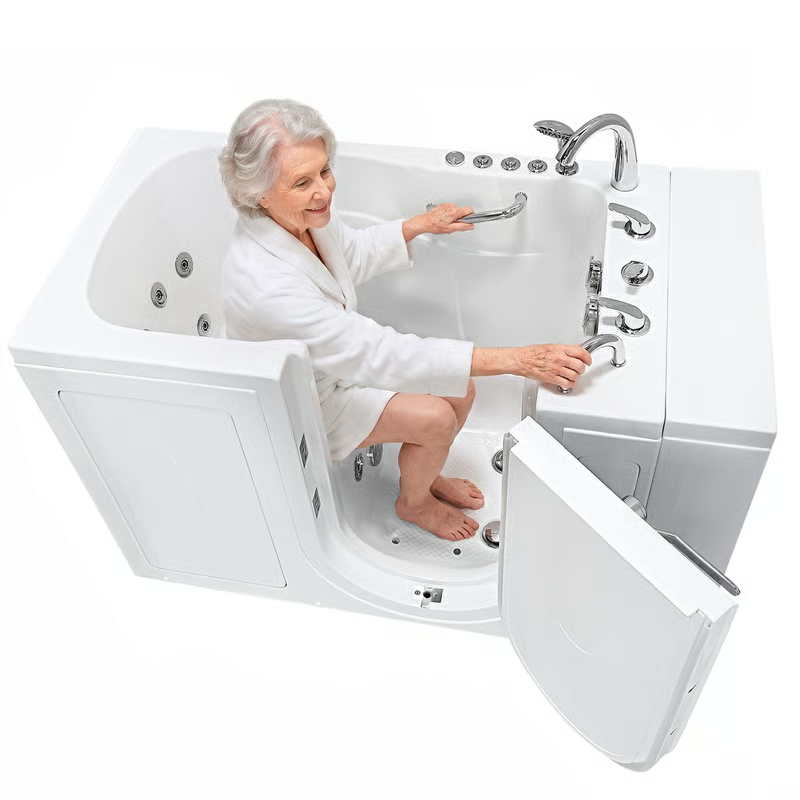
What does home accessibility adaptation cover?
AHCA's description of the service is short. It makes changes to your home to help you live and move in your home safely and more easily, with the examples of installing grab bars in your bathroom or a special toilet seat. It then says the service does not include major changes like new carpeting, roof repairs, plumbing systems, and so on. DOEA adds the governing rule for every LTC service: it must be necessary in order to delay or prevent nursing facility placement.
Read together, that means a plan will readily approve the small, high-value safety items and will scrutinize anything that looks like a remodel. A walk-in tub or roll-in shower involves plumbing work and is a much larger job than the published examples. Some plans approve larger adaptations when the care plan shows they are the only way to keep the person home, but you should treat that as the exception, get the answer in writing, and plan for the family to cover the difference.
Typically approved
- Grab bars in the bathroom
- Raised or special toilet seats
- Hand-held shower heads and shower chairs (often as medical equipment and supplies rather than adaptation)
- Minor changes that remove a barrier the care plan names
Typically not covered
- Plumbing systems and other major structural changes
- Cosmetic work, tile, flooring and remodeling
- Hydrotherapy jets, heated seats and comfort options
What is the care manager's role?
Every SMMC LTC plan must offer case management, and DOEA says plans must make at least 26 services available, including case management, personal care, hospice and transportation. The case manager, often called a care manager by the plans, assesses the enrollee, writes the plan of care that lists the services needed, authorizes providers, and reviews the plan over time. Nothing in the home is paid for unless it is in that document.
For a bathroom change, the practical sequence is: the care manager documents the barrier and the risk, the plan authorizes the adaptation, and the plan's contracted provider does the work. Families rarely choose the installer. If you want a specific product, such as a particular walk-in tub or a wheelchair transfer tub, bring the written estimate and specifications to the care manager and ask how the plan handles a family contribution toward a larger job.
Ask the care manager, in writing: Is home accessibility adaptation in my care plan? Which bathroom changes does the plan approve? Who selects and pays the contractor? Can the family pay the difference for a larger job, and how is that documented?
Complaints and help: DOEA, the ADRCs and the Long-Term Care Ombudsman Program form the Independent Consumer Support Program for questions, grievances and appeals. Plan complaints go through AHCA at flmedicaidmanagedcare.com/complaint.
What can you do while you wait?
The wait list moves by score, not by calendar, so a family with a parent at rank 3 may wait a long time. Do the cheap safety work now: grab bars, a shower chair, a hand-held shower and a slip-resistant surface. For a larger change, look at the other Florida options in parallel. A veteran may qualify for the VA HISA grant, which has a lifetime limit of $6,800 for a service-connected disability or $2,000 otherwise. County SHIP repair programs fund accessibility work in many counties. Our Florida walk-in tub cost guide explains what an installed tub or shower includes so you can compare any partial help against the real total.
For the national picture, Aging Safely Baths' guide to whether Medicaid pays for walk-in tubs in each state puts Florida's program alongside the other 49. If you want a written, itemized estimate to show a care manager or a SHIP office, request one here or call 1-888-779-2284. No bathing product eliminates the risk of falls; products are designed to reduce risk when installed and used properly.
Numbers to keep by the phone
- Elder Helpline (reaches your ADRC): 1-800-963-5337
- CARES, Department of Elder Affairs: 850-414-2000
- Plan choice counseling: flmedicaidmanagedcare.com
- Aging Safely Baths, written estimates: 1-888-779-2284
Florida Medicaid long-term care bathroom FAQ
Does Florida Medicaid pay for a walk-in tub?
Rarely, and never automatically. The Statewide Medicaid Managed Care Long-Term Care program includes a home accessibility adaptation service, which AHCA describes with examples like grab bars and a special toilet seat and says does not include major changes like plumbing systems. A plan may approve more when the care plan shows medical necessity, but a full tub replacement is well beyond the published examples. Ask the plan, in writing, before counting on it.
What does nursing facility level of care mean in Florida?
It is the medical eligibility test for SMMC Long-Term Care. The CARES program at the Department of Elder Affairs assesses the person and must find that they need the level of care a nursing home provides and meet at least one clinical criterion. CARES assessments are done by a registered nurse or assessor, reviewed by a CARES physician or nurse, and cost nothing. Without this finding, no long-term care service, including home adaptations, is available.
How does the Florida long-term care waitlist priority score work?
An Aging and Disability Resource Center screens the person by phone, which takes about 45 minutes to an hour, and the answers produce a priority score. Scores of 0 to 29 are a low priority rank (ranks 1 and 2) and are not placed on the wait list. Scores of 30 and up are a high rank (ranks 3 to 5), with ranks 6 to 8 for aging-out referrals, imminent risk and Adult Protective Services high-risk referrals. Releases happen monthly by score and frailty, not by time on the list.
Who decides whether my bathroom change is covered?
Your managed care plan, through the care plan written with your case manager. Florida requires every LTC plan to offer case management and lists home accessibility adaptation among the services plans must make available, but each service is approved only when it is necessary to delay or prevent nursing facility placement. The case manager documents the need, the plan authorizes the work, and the plan's contractor does it.
Can I skip the waitlist if my parent is already in a nursing home?
Possibly. AHCA lists exemptions from screening and the wait list for current Florida Medicaid recipients who meet other LTC requirements, including nursing facility residents who have lived in a Florida licensed skilled nursing facility for at least 60 consecutive days and want to move to the community, and people referred by Adult Protective Services as high risk. A move home from a nursing facility is also the situation where a bathroom adaptation is most often written into the first care plan.
What should I do about the bathroom while waiting for Medicaid long-term care?
Do not wait for a fall. Inexpensive changes such as grab bars, a shower chair and a hand-held shower can be done now, and county SHIP repair programs or a VA HISA grant may help with larger work in the meantime. Our paying guide covers every Florida option. When the plan enrollment comes through, ask the case manager to include any remaining bathroom barriers in the first care plan.
Official sources
- Florida Agency for Health Care Administration, Find Out About Long-Term Care Services: ahca.myflorida.com
- AHCA, SMMC Long-Term Care Program Screening: ahca.myflorida.com
- AHCA, SMMC LTC Program Waitlist Release: ahca.myflorida.com
- AHCA, SMMC Long-Term Care Recipient FAQs: ahca.myflorida.com
- Florida Department of Elder Affairs, Statewide Medicaid Managed Care Long-Term Care Program: elderaffairs.org
- Florida Department of Elder Affairs, CARES: elderaffairs.org
- U.S. Department of Veterans Affairs, HISA grant: prosthetics.va.gov
Program rules change. Confirm current details with your ADRC, CARES and your plan. This page is general information, not legal or financial advice.
Need a written estimate for a care manager or SHIP office?
Free, itemized quotes for Florida homes. No pressure.
1-888-779-2284 (BATH)